
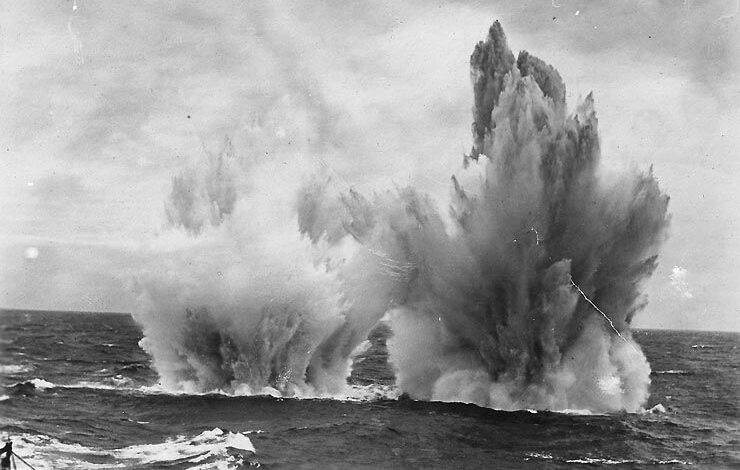
One of the major challenges faced by the combatants of both sides during the First World War was finding submarines underwater. The issue was particularly important for the Allies because Germany turned to U-boats as an equaliser. If they could whittle down British naval superiority – in particular – then other naval options became available to them. German U-boats were also a pivotal weapon in the war against Allied merchant trade, on which Britain in particular relied for survival.
Until a practical means of detecting U-boats underwater could be found the only way the Allies had to find them was by watching for disturbances in the water when the U-boat came up to periscope depth. This was not very effective, and U-boats prosecuted attacks against warships across multiple theatres, notably in the North Sea and off Gallipoli. One outcome was that even a suspected sighting was enough to force ships away from the danger area. This affected surface actions. As just one example, a suspected U-boat sighting during the battle of Dogger Bank in January 1915 prompted a cascade of miscommunications that led to the British breaking off pursuit and focusing instead on the crippled Blucher.
The eventual result in Britain was a crash programme by leading physicists to develop equipment able to pick up U-boats underwater, matching a similar effort by French physicists across the Channel. It wasn’t easy, but the general methods – underwater listening systems, magnetic anomaly detection, and ultrasonic sound detection and ranging – remain in use today. The British effort drew in many of the leading British physicists of the day, including Ernest Rutherford, the big, bluff New Zealand scientist who had discovered the causes behind radioactivity. By the time the First World War broke out he was professor of physics at Victoria University of Manchester, running a powerhouse team that variously included such luminaries as Niels Bohr, Hans Geiger, the mathematician Charles G. Darwin – grandson of the naturalist – and Ernest Marsden. In 1911 Rutherford discovered the atomic nucleus, setting his team on to the job of detailing what this meant. By 1913 Marsden and Geiger had shown that Rutherford’s nuclear model of the atom, in which most of the mass was concentrated in a tiny nucleus, had to be correct.
This work was dislocated by war, which drew off Rutherford’s team to fight. Rutherford did not think that using scientists in the front line was the best use of their skills, brought home to him in 1915 when his best student, Harry Moseley, was killed at Gallipoli. Rutherford was dismayed: he and his colleagues alike knew just how incredibly talented Moseley was. Rutherford was also upset by the way war had brought essential physics research to a halt – just as he had many new questions, of which the latest was Marsden’s detection of what looked like hydrogen atoms during the work done to prove Rutherford’s nuclear atom model. Where those had come from wasn’t clear, but Rutherford wanted to know, speculating that they might be a result of beta radiation. The unknowns called, so Rutherford picked up where Marsden left off, now working alone with the aid of one assistant. And then that work, too, was largely brought to a halt when he was shoulder-tapped to join a naval board tasked with developing new seagoing technologies.
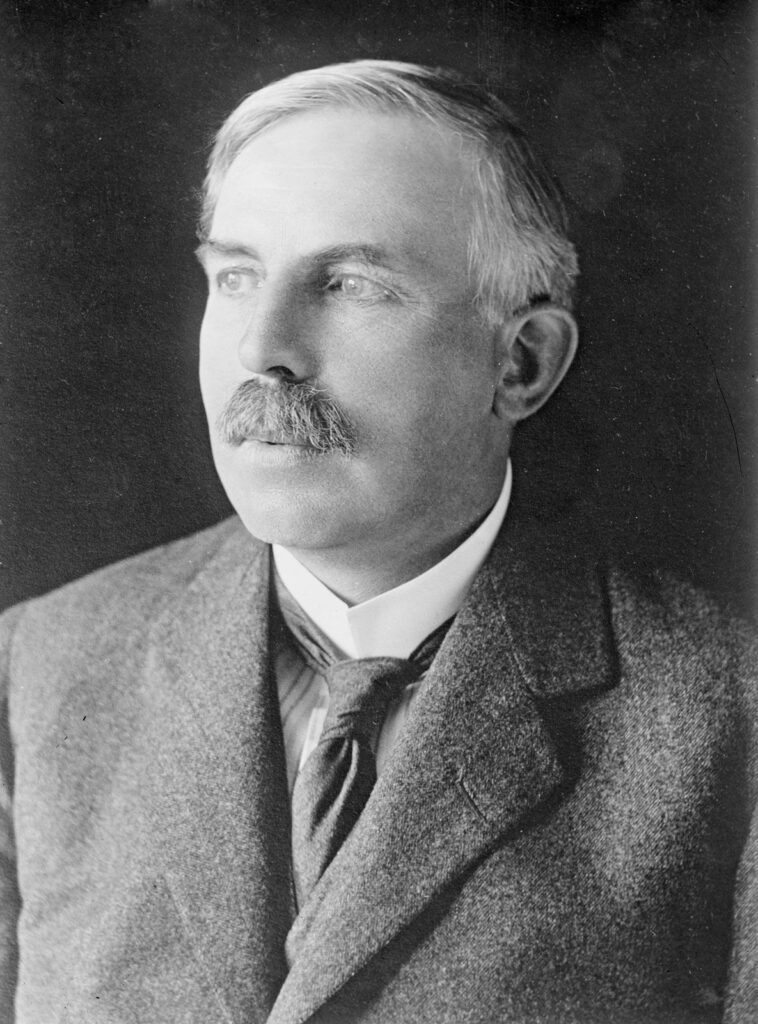
It took the British a surprising time to harness their scientific community for war technology. The lead was taken by the Royal Navy, whose political head in 1914 was Winston Churchill, a technophile of mercurial interest. Churchill’s first idea was a clandestine effort to build ‘land-ships’ – tanks – which was eventually drawn into the War Office.[1] Churchill left office as a result of fallout over Gallipoli, but in June 1915 the new First Lord, Arthur Balfour, proposed a Board of Invention and Research to investigate new naval technologies, notably the challenge of finding submarines underwater. This last had been given teeth by Germany’s brief foray into ‘unrestricted’ submarine warfare, in which U-boats were authorised to attack civilian shipping on sight instead of surfacing and stopping them as demanded by pre-war agreements. The issue of attack without warning was, in any case, always faced by British warships. Balfour also wanted to review the ideas being offered by civilians for war-winning devices. Similar groups were being set up by the Ministry of Munitions and other government departments, so it seemed sensible for the navy to do the same.
Balfour approached Admiral Sir John Fisher to head the new unit. Fisher was in disgrace after resigning over the Gallipoli issues, but agreed to do so. He obtained a list of prospective scientists from Lord Rayleigh and shoulder-tapped the leading physicist J. J. Thomson along with his long-standing friend Sir Charles Parsons and the chemist Sir George Beiby. These people formed the core board, supported by an advisory panel that included Rutherford, radio pioneer Oliver Lodge, the physicist Sir William Crookes, William Bragg, and Rayleigh.
The new organisation met for the first time in offices on Cockspur Street, London, on 19 July 1915. They defined six different fields that demanded attention: airships, submarines and wireless, naval construction, anti-aircraft equipment, ordnance and ammunition, and aircraft armament. The association of submarines with wireless (radio communication) was no accident: both engaged directly with leading-edge physics. Each field was handled by a sub-committee, and each member of the advisory panel was expected to serve on two sub-committees. In addition, the BIR had to assess an avalanche of civilian proposals for war-winning devices, of which more than 40,000 ideas were received by mid-1917, including 14,655 concepts involving submarines, mines, and submarine detection. All had to be assessed, irrespective of how silly they might be.
Rutherford got involved with the submarine side. The work of this sub-committee initially focused on three approaches: magnetic detection, passive direction-finding by means of underwater hydrophones, and active echo-location. The last two required a means of picking up very faint sound underwater, including at frequencies beyond human hearing. The board were not starting from scratch: work had been done into all of these issues, but much remained to be defined. Rutherford picked up the problem, which carried heavy challenges. He decided the best approach was a piezoelectric system, modelled after a device developed in 1882 by Pierre Curie. Rutherford had seen it demonstrated in 1910 and knew the system could generate small electric currents in response to pressure – exactly what was needed for underwater sound detection. The same idea occurred to a French team under Paul Langevin, who were independently developing underwater detection methods across the Channel. Rutherford knew Langevin well, and there have been suggestions that he was given a heads-up about piezoelectric systems by the French scientist.[2] Rutherford got going, and the work he did at Manchester – using a large concrete water tank – produced data so precise that it was not surpassed until the 1980s.[3]
All of this was challenging. There was a gulf between what Rutherford and his colleagues could do in their laboratories, and a practical system that could be mass-produced. The pressure grew from early 1917 when the Germans reintroduced unrestricted submarine warfare, threatening the British ability to bring in food across the Atlantic. Rutherford worked closely with Bragg to develop practical equipment, and they later shared a patent on the hydrophone design. Meanwhile Robert Boyle and Albert Wood, based in the Admiralty Research Laboratory, worked on the active sound transmission-and-detection system, using Rutherford’s piezoelectric system to pick up echoes.
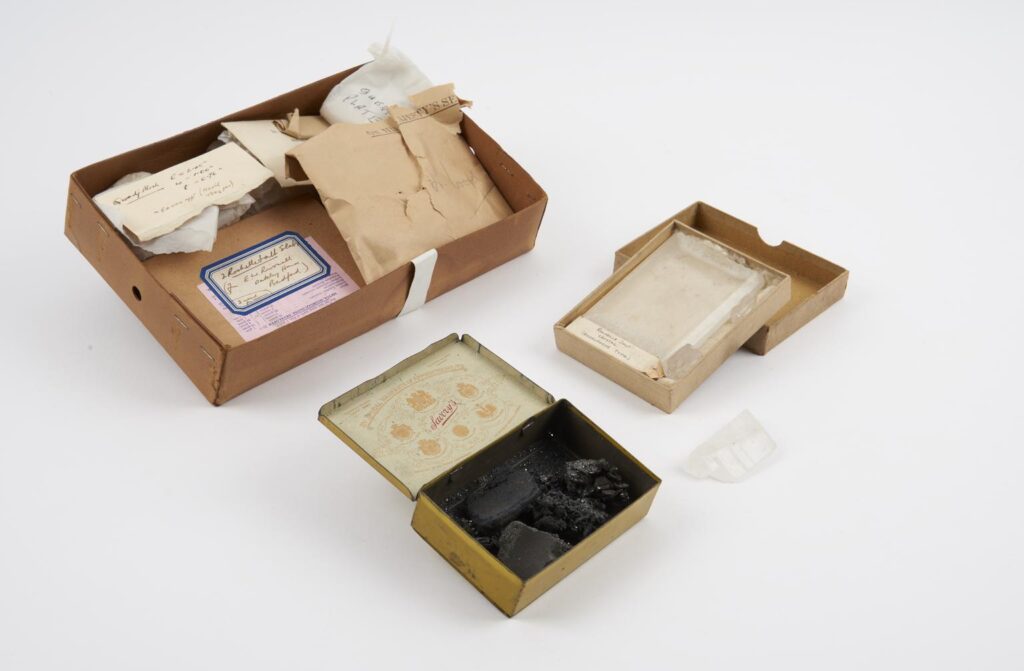
Naming this technology was another matter. Underwater microphones became ‘hydrophones’, a neologism that remains in use today. Other terms were less easy to coin. The BIR initially referred to their echo-detection device as ‘Supersonics’, meaning ‘super’ sonics in reference to the higher-than-audible frequencies being used, not ‘faster than sound’. But that also made its nature obvious, so it was eventually dubbed ASDIC. Various explanations have been given as to the origin of this term, but it appears at the time that it was simply the name of the Admiralty’s Anti Submarine Division with ‘ics’ added to the end. The aim was to obscure what it did.[4]
The bulk of the work was done by mid-1917, which was fortunate because the BIR was shortly disbanded. The problem was Fisher. He had always been a controversial figure and did not hesitate to use his position as head of the BIR to further his own political interests within the service, by this time mostly to do with settling scores. There were reasons why it was nicknamed the ‘Board of Intrigue and Revenge’. In September 1917 the First Lord of the Admiralty, Sir Eric Geddis, disbanded the Board on the basis that it had a dysfunctional relationship with the Admiralty.
Rutherford returned to his work on the atomic nucleus at Manchester, again working alone with the help of but one assistant. His laboratory notebooks for the period are undated apart from year, but he successfully split apart a nitrogen nucleus in 1917-18 – based on other correspondence, probably early 1918 – knocking particles out of it with his laboratory apparatus. He named the newly discovered nuclear particle the ‘proton’, after William Prout (1785-1850). In the process Rutherford also transmuted his target material from nitrogen to oxygen, making him the first person to artificially transmute matter, though this was entirely incidental to his primary intent. Admiralty work continued to intrude, notably a trip he made in early November 1918 to Paris. This war work finally came to an end in February 1919, marked for the scientists by a dinner at the Midland Hotel in Manchester. Rutherford signed a joint letter to the Admiralty urging the service to maintain its interests in the sciences, something he and his colleagues felt essential as warfare became ever-more ‘scientific’ in nature.
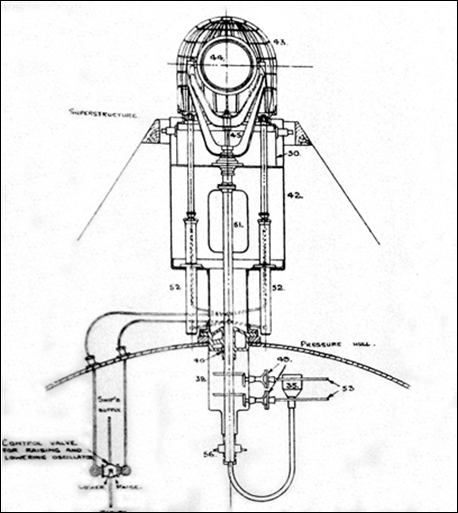
The Admiralty took that advice on board, and underwater detection technologies were further developed from the start-point created by the BIR. Nor were the British alone. The French had paralleled the British wartime effort – and were soon followed by the United States Navy, who were given the key details by an Allied mission led by Rutherford in 1917. The Royal Navy, meanwhile, looked at ways of fitting ASDIC into submarines, trialling a Type 113X installation in the submarine H32 during the early 1920s and then fitting the same system to X-1, commissioned in 1925. Much of this rested on the work done during the war by Rutherford and his colleagues.
Matthew Wright is a professional historian and a Fellow of the Royal Historical Society at University College, London. Buy his book Ernest Rutherford and the birth of modern physics (Scribe, New York, 2025), available from any good bookstore or online at: https://bookshop.org/p/books/ernest-rutherford-and-the-birth-of-modern-physics-matthew-wright/
Copyright © Matthew Wright 2025
[1] Matthew Wright, Those Who Have the Courage, Oratia Books, Auckland 2024, pp. 156-157.
[2] Shaul Katzir, ‘Who knew piezoelectricity? Rutherford and Langevin on submarine detection and the invention of sonar’, Notes and Records of the Royal Society, Vol. 66, 2012, pp. 141–57, esp. p. 14.
[3] Noted in Christine Twigg, ‘Rutherford’s Secret War’, https://www.ww1.manchester.ac.uk/rutherfords-secret-war/, accessed 14 September 2025.
[4] www.historyofinformation.com/detail.php?entryid=1672, accessed 17 January 2025.

Recent Comments